
Royal Commentary & Media

From a lifelong interest to more than a decade of broadcasting
My interest in the British Royal Family began at a young age and has remained with me throughout my life.
What started as a personal fascination with the history, traditions and personalities of the Monarchy eventually developed into something I could never really have anticipated – becoming a regular commentator on royal affairs for the BBC and other media.
My first opportunity came in 2013, when I was invited by BBC Radio Suffolk to contribute to its coverage of a royal story. What I initially expected to be a one-off interview became the beginning of a broadcasting relationship that has now lasted for more than a decade.
Since then, I have been invited to provide commentary and analysis on royal events ranging from celebrations and overseas visits to breaking news and some of the most significant and poignant moments in recent British history.
While the majority of my broadcasting assignments to date have been with the BBC, I work on a freelance and independent basis and am available to contribute across television, radio, digital and other media platforms.
My TV appearances
Commentating on history as it happens
Royal commentary presents an unusual challenge. The Monarchy is an institution shaped by centuries of history and tradition, but it also exists within contemporary Britain and must continually respond to a changing world.
For me, good commentary is therefore about much more than knowing names, dates and protocol. It means understanding the historical and constitutional context behind an event while being able to explain its relevance to a modern audience.
Over the years, I have contributed to coverage surrounding royal births and weddings, jubilees, significant anniversaries, overseas engagements, changes within the Royal Family and major ceremonial occasions.
There have also been moments when the nature of the commentary has been altogether more sombre.
Following the death of HRH The Prince Philip, Duke of Edinburgh in 2021, I was invited to contribute to BBC Radio 5 Live, reflecting on his extraordinary life and more than seven decades of service alongside Queen Elizabeth II.
The following year brought an event few of us who had grown up during the second Elizabethan age could quite imagine experiencing.


The death of Queen Elizabeth II
The death of Queen Elizabeth II on 8 September 2022 was both a historic national moment and, for somebody who had followed the Monarchy for most of his life, a profoundly poignant one.
During the period of national mourning that followed, I contributed to BBC coverage, helping audiences understand the extraordinary sequence of constitutional, ceremonial and historical events taking place as one reign ended and another began.
I subsequently provided coverage and commentary surrounding Her Late Majesty’s State Funeral, as Britain, the Commonwealth and people around the world marked the end of an extraordinary seventy-year reign.
These were events I had spent many years understanding from a historical perspective, but nothing quite prepares you for witnessing them actually unfold.
To be invited to contribute to the coverage of such an important moment in our national story was an enormous privilege and an experience I will always remember.
A snippet from my appearance on BBC Radio Suffolk following the Queen's death
A new reign
The accession of King Charles III opened an entirely new chapter for the Monarchy and, with it, a fascinating period on which to comment.
I have continued to contribute to media coverage throughout the new reign, including the Coronation of Their Majesties King Charles III and Queen Camilla, the King’s public duties, overseas engagements and the evolving role of the Monarchy.
The transition from one reign to another has provided a particularly interesting opportunity to consider the balance between continuity and change – preserving the traditions and constitutional principles that define the institution while adapting them for a new generation.
My commentary has also encompassed the King’s international role, royal diplomacy and the significance of major speeches and overseas engagements.
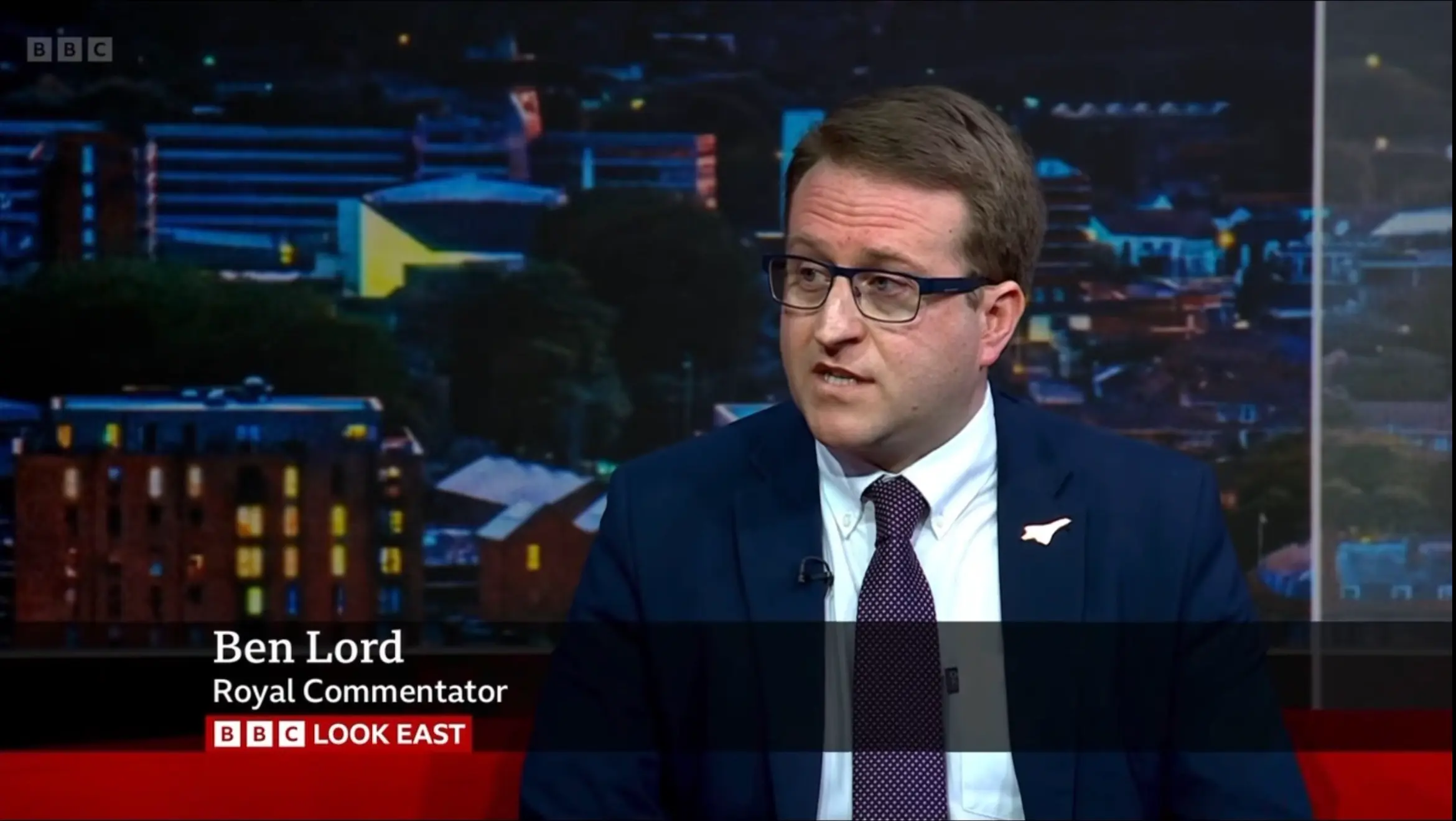
Responding to breaking news
Some of the most demanding broadcasting opportunities come not from events that can be anticipated and researched in advance, but from major stories breaking without warning.
One particularly memorable example came in March 2024, when Catherine, Princess of Wales announced that she had been diagnosed with cancer and was undergoing preventative chemotherapy.
As the news broke, I was invited to provide live breaking-news commentary for BBC Radio 5 Live and the BBC News Channel, responding to an intensely personal announcement that was simultaneously becoming a major international news story.
It was a very different kind of royal commentary. There was inevitably enormous public interest, but at the centre of the story was a young mother dealing with a serious health diagnosis while facing extraordinary levels of public and media scrutiny.
My contribution therefore required sensitivity as much as analysis – helping to place the announcement in context and respond to events as they unfolded, without losing sight of the very human situation behind the headlines.
Being asked to contribute across both BBC national radio and television during such a significant breaking story was a considerable professional privilege and demonstrated another dimension to the media work I have developed since my first BBC interview in 2013.
Informed, balanced and independent
Although my interest in the Royal Family began personally, I have always tried to approach media commentary with objectivity and perspective.
Being interested in the Monarchy does not mean regarding everything it does uncritically. Credible commentary requires an understanding of the institution, its history and constitutional position, while also recognising the questions and challenges it faces.
That balance is important to me.
My role is not to advocate for the Monarchy or any particular editorial position, but to provide informed, balanced and accessible commentary.
Whether discussing a major State occasion, explaining an unfamiliar piece of royal protocol, responding to breaking news or considering the future direction of the institution, my aim is to give audiences useful context rather than simply offering opinion for its own sake.
Broadcasting also demands an ability to respond quickly. Live television and radio rarely provide the luxury of a carefully prepared script, and some of my most memorable appearances have involved reacting to events as they unfold.
That unpredictability is also part of what I enjoy about it.

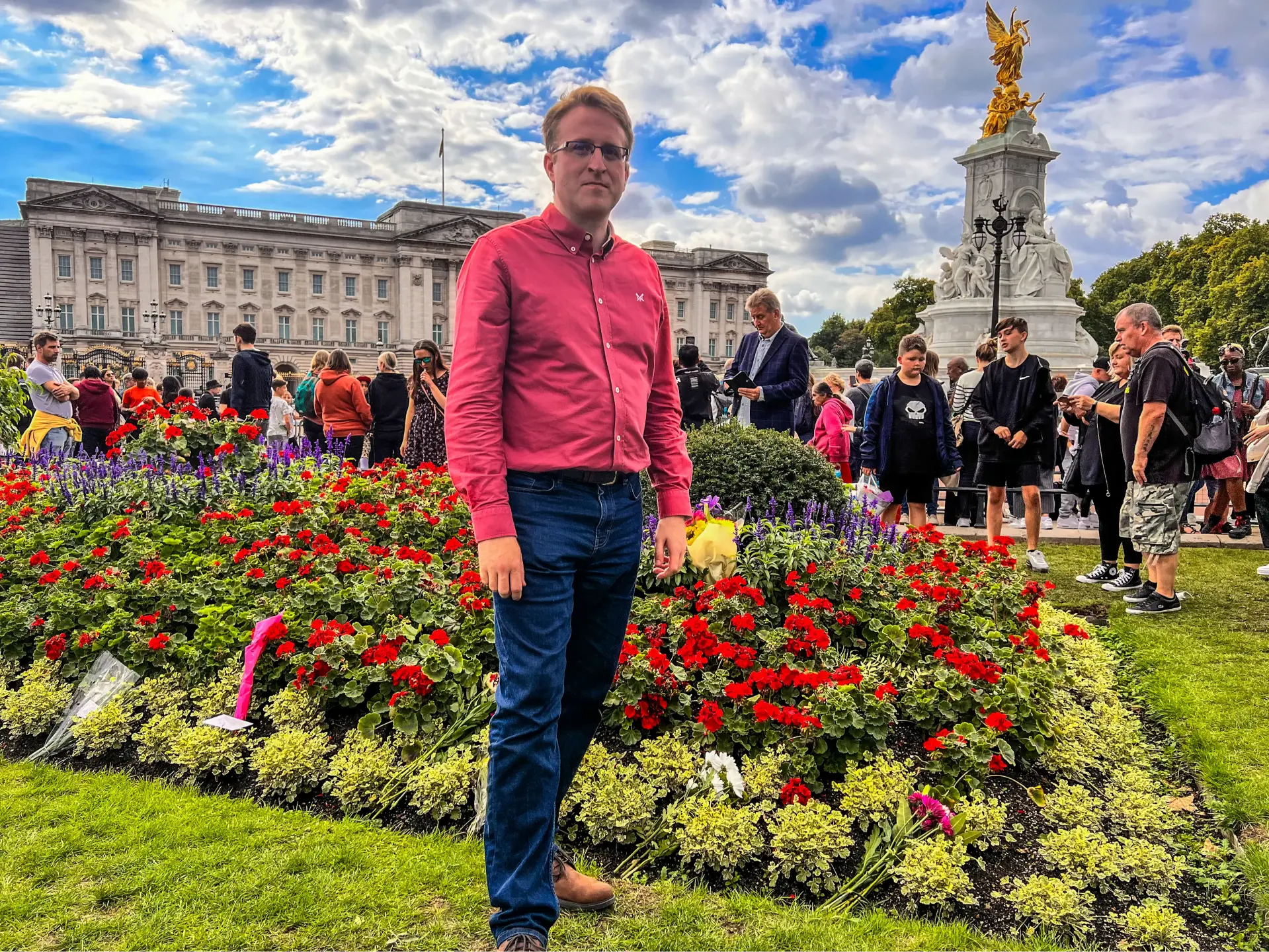
Continuing the story
More than a decade after my first BBC interview, it still feels slightly remarkable that an interest which began when I was young has led to opportunities to comment on some of the defining royal events of my lifetime.
From national celebrations and historic State occasions to the death of Queen Elizabeth II, the beginning of a new reign and major breaking news, broadcasting has given me a unique perspective on a period of extraordinary change for the British Monarchy.
It remains a subject about which I am endlessly fascinated and one on which I continue to enjoy providing informed, thoughtful and engaging commentary.
Media enquiries
Although the majority of my broadcasting work to date has been undertaken with the BBC, I remain an independent freelance commentator and am available to broadcasters, news organisations and other media outlets in the UK and internationally.
I am comfortable contributing to live television and radio, breaking-news coverage, pre-recorded interviews and longer-form discussion, whether providing immediate reaction to a developing story or more detailed historical, constitutional and contextual analysis.
For media enquiries, interview requests or availability, please get in touch.
